Tuesday, October 23, 2012

iPad mini : copycat / end of innovation for Apple ?

The Myth of Innovation

Innovation does not occurs alone.  There is no "epiphany" and no "Eureka" moment. There is no lone inventor that revolutionize an industry. All this is a myth as was Steve Jobs and Apple mystical innovation aura.

Please refer to the excellent book by Scott Berkun : The Myth Of Innovation if you want detailed proof. In order for an innovation to succeed, it has to be perceived as original and, like war, the winner is rewriting history to produce a nice and convincing narrative. Winning, these days, means being the dominant brand in your category. Sometimes it can be extravagant (Facebook), sometimes it can look like a religion (Apple, Open Source, etc.).

Our brain is cabled to like simplistic and logical stories that explains otherwise very complex systems : we thrive simplicity and we don't like complex subjects that are in shade of grays. We want simple solutions to complex problems and, more than anything, we want to be convinced that ... we are right !

Marketers know it very well and use this each time they interact with a potential customer. They create for us a nice magical story that we can relate to (that our simple brain _want_ to believe) and integrate into our library of (simple) knowledge. If it works well, we will buy their product. If it work very well, we will be convinced that their service or product offering is unique. It is the only product/service that can satisfy us : others are false gods, they don't innovate, they can only copy our brand and, as such, they can not satisfy us.

Don't make me wrong : Steve Jobs was a genius. A pure marketing and financial one. He created a distribution platform (iTunes) and various readers (iPod, iPhone, iMac, iPad, iMini, etc.) that were used to sell content. As a pure intermediary between the consumer and the producer (music, movies, TV, apps, etc.) he was able to secure contracts where Apple will cash 30% of the whole sale. This is genius and great entrepreneurship !

The iPad mini : the first reactive move from Apple (in recent history)

I don't doubt the iPad mini is a great product. They all are. However, I really believe this will mark a turning point. I have use a 7 inch tablet for years (samsung galaxy IIRC) and for month a Nexus 7 from ASUS/Google. Amazon has produce its kindle for month.

In short : Apple competition already have taken the market by storm. And Apple has been forced to react.

React.

Interesting change. Of course, massive afficionados, tech-media and mass-media will be the first one to stress that "the others" don't target "exactly the same market" that "they have superior characteristics" (RAM, CPU, etc.) but ... we can expect to have a better experience on the mini (well, the fact is those authors did'nt even test it!). Of course, the "Retina display" is not present but ... that's OK. Remember, it target a "different market".

Apple : big bang of big crunch ?


All in all I really think this is a tipping point for Apple : what is the advantage of their most recent products ?

For the first time, even tech-media and mass-media started to look around and were forced to compare the latest version (iPhone5, ipad mini) to the competition. And in each case, the customer benefit was not ... clear. In each case, we were back to very weak differentiation factors (CPU, resolution, size [7.9 inch is a great innovation, it is way better than ... 7 inch. Really ?]).

For previous product launch, Apple always introduce real value for their customers. For their last two products it was not the case. None of them were really disruptive or "innovating" as we like to label things. They were incremental improvement and were driven by market and shareholders pressure instead of the desire to produce a great innovation.

I really believe that Apple produces both the iPad mini and the iPhone5 because of extrinsic motivation namely shareholder pressure and expectation. They yield to external pressure instead of internal need to do the best product and to innovate. They started to become mainstream and to produce regular product.

Of course, mainstreaming is not what your customer want, especially the Apple customers. They are paying a premium for something premium. They are paying a premium for each bit of data, for each piece of software and for each piece of content (remember the 30% ?).

Conclusion

The open ecosystem of Android/Linux dominate officially the smartphone and tablet market. Even for a single manufacturer, Samsung is taking the lead out of Apple (number of unit, not yet sales or profit). Android is the new PC while Apple looks more and more like an Amiga or ... an Apple II. More integrated (only one company) and maybe superior for this reason but with no capacity whatsoever to target all the markets that Android targets right now (rugged, secure, low end, high end, embedded in a running treadmill, 5 inch, 7 inch, 8 inch, etc.)).

With these two new product (iPhone5 and iPad mini), Apple looses its mojo, mainly because it yields to external pressure (shareholders). Apple _had_ to present new products in order to reach its target and fuel its expected growth. For the first time, even Apple-convinced customers have to look at a detailed technical specification instead of enjoying a "unique experience". Nothing unique in these two releases...

This could be the beginning of the end for Apple because, its huge market capitalization is based on the premises of future growth. It inflated very fast and, like most bubble, it could deflate even faster especially given the current financial crisis and mad expectations of the surviving investors.

All in all, I really think that open ecosystems have way better chance of success because they can adapt and create various products, including for "niche" market (please see "the long tail" by Chris Anderson for more on this) while a mainstream and proprietary vendor will always be challenged by competitors on his market but also by a myriad of smaller competitor that address very specific needs and markets.

Open ecosystem fuels innovation because the entry cost is way lower : trial and errors happens at a much faster pace and, nobody being "in control", it increase competitions as new challengers can rise very fast (Samsung is the current leader but you can expect LG, ASUS, Huawei and others to ... innovate at a furious pace to reach the summit). This benefit the customer that has more choice and pay a lower price for the same (or even better!) service.

Monday, June 18, 2012

Windows keyblet : no disruptive innovation, still not open source...

Introduction 

This post is based on various sources and discussion that occurred in the last weeks with various IT professionals and people interested in Cloud, Mobile device, open source and innovation.

One of the sources is this article from the Wall Street Journal : http://online.wsj.com/article/SB10001424052702303703004577474910029263198.html

Well, of course a keyblet is a fusion between a tablet and a keyboard. While the keyblet is presented by Microsoft as an innovation, we will see that it is not the case and that it will fail to offer a great experience both for PC/keyboard users and for touch-screen devices *touchlets?*.

What is disruptive innovation ?

I met M. Christensen at a conference three years ago. The conference was about (disruptive) innovation and education. I then read "Disruptive Class" and then most of his books and I will use his definition from his website :
www.claytonchristensen.com/disruptive_innovation.html

"An innovation that is disruptive allows a whole new population of consumers access to a product or service that was historically only accessible to consumers with a lot of money or a lot of skill.  Characteristics of disruptive businesses, at least in their initial stages, can include:  lower gross margins, smaller target markets, and simpler products and services that may not appear as attractive as existing solutions when compared against traditional performance metrics."

In this article, I will refer to smartphones, tablets and future "touch" based interface as a disruptive innovation in the word of telecom first (do you remember Nokia ? Blackberry ?). This disruptive innovation then, start eating the PC market at home first and will, in the near future in the enterprise.

Why having a Keyboard is bad for (disruptive) innovation


The real disruptive innovation about smart-things (phones, tables, future thingy, etc.) is about the touch screen interface and the cloud. They have no keyboard. That's part of their DNA.

In the meantime, Microsoft sit on the PC market and they are busy developing keyboard compatible devices. Too bad for them, excellent for the competition !

Either the keyboard is optional : in this case, why do you have to travel with it and include it in your device. Or the keyboard is mandatory : then why having a touch screen ?

How can you make slick interfaces for applications with and without keyboard ?

Microsoft will spend a good part of their developer time to square the circle. Not possible. Google and Apple do not spend a single development cycle about those problems : that's "old world" problem. They are busy trying to invent another way to input data : Apple with Siri, Google with voice search, IBM with Watson (of Jeopardy fame), etc. Believe me, it will not be a "Keyblet".

Trying to bridge the old and new world will make every single user unhappy and they know it : they want only happy users from the new world.


Why killing your lifetime partners is very bad

Microsoft never ever designed and sold computers. To the best of my knowledge, they designed and sold the Xbox, the Zune (iPod killer, remember ?) and then some keyboards and mice.

They were careful to work with partners like HP, Dell, etc. for the core device : the PC. Now, this type of alliance will be more and more complex as the market for smart devices is expected to dwarf the PC market in the next few years. Also, I expect other players to avoid the "Keyblet" type of device ... forever.

Anyway, you can now expect a very different song from the lifetime partners of Microsoft. They will negociate the Windows tax on the PC and will be way more open to ... open source alternative (Apple is as closed as a company can be!).

The race is open and it is every man for himself...

Why betraying your lifetime chipset maker is very bad too

The wintel couple is not a myth. It was a long time and well established market strength on the PC market. On the touchlet market, Intel is invisible as both Android and Apple used ARM based devices dominate the market (>90%).

Of course, from a competitive point of view, it makes a lot of sense for Microsoft to use ARM-based CPUs and a very special "Windows RT". However, I'm sure that this is considered by Intel as the most profound betrayal : decades of collaboration and market ruling are at stakes and Microsoft just lost another long time partner.

What will Intel do ? I'm not sure but it looks like ARM is now invading the PC and thin client market as well (See those wonderful new HP with thin-client + screen power by POE : http://www.techworld.com.au/article/424203/hp_unveils_ethernet-powered_thin_client/ )

What about Linux & Open Source ?

Well, like the XBox before, I expect this device to be rooted really quickly once it will be available on the market. Will a more open platform help ? Maybe but everything I wrote on this post will apply as well to a Linux-based Microsoft keyblet : trying to mix old technology and a real disruptive innovation is not possible. Geeks will certainly enjoy this platform and have some pride to run Linux on a real Windows keyblet. I do not expect Linux and Open Source to change this keyblet fate...

Conclusion

On the superficial side (appearance, design, etc.), I'm pretty certain the keyblet is amazing and excellent.

I'm very skeptical about the ecosystem : developers and applications. This is the real key to world domination and Microsoft has changed every development toolkit in favor of more HTML-ish development kit that is not at all familar to MS developers. Also, they are a _very_ late entrant on the market : Apple has more than 600 000 apps and google more than 400 000. Why spend time learning a new platform ?

On a deeper level, here are the messages that Microsoft is sending to the market and his partners :
  • To PC makers : game over. It is every man for himself now. We are now playing the same game and we just became a serious competitor. I expect this to open the market for Linux on the PC side because those major PC players do not feel respected by Microsoft anymore and I also expect those PC makers to transition to Android or a homegrown platform instead of Windows (Dell and HP in particular).
  • To Intel : sorry guys. We love you but now, we are using ARM too. Too bad you can not make as simple and power efficient chips. We can not wait anymore and we will let the market decide. I don't know what Intel will do as Microsoft is certainly a big part of their ecosystem. They should certainly focus on the touchlet market. I hope it is not too late for them...
Finally, Microsoft can not play the same game as Google and Apple : they have to support a stupid keyboard for every app that will be available for this device. They will, as a consequence, completely miss the touch revolution and remain prisoners of the outdated keyboard paradigm.

Long live the keyblet and may I be wrong (for Microsoft!).

Thursday, February 2, 2012

Innovation = Android + course à pieds !


En tant que techno-geek, coureur et amateur de sports d'endurance, il a été difficile pour moi de passer à côté d'une fusion entre technologie de type tablette et ... un tapis de course à pieds.

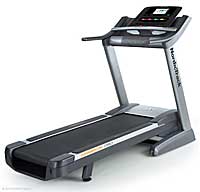
Quelques impressions après quelques mois d'utilisation du tapis de course "NordickTrack Commercial 1750 édition 2012.

Quand l'hiver frappe le Québec, ce qui arrive tous les ans, il est parfois difficile de se motiver à aller dehors surtout lorsque les conditions sont de type pluie/neige/glace ou alors carrément glissante. Avec un emploi du temps chargé, s'entraîner à la course peut donc devenir un véritable déplaisir/obligation ce qui n'est pas forcément souhaitable sur le long terme. Ainsi, ma charmante épouse et moi nous sommes mis en demeure d'acheter un tapis de course à pieds.

Résumé d'un entrainement
Internet à la rescousse et voici que nous sélectionnons et installons (ce qui ne fut pas une mince affaire : 150kg de machinerie à descendre sans trop la casser dans le garage). Réparation des pots cassés (les attaches d'un capot qui avaient sauté) puis se rendre compte que, à l'étape 2 (sur 50) nous avons oublié de brancher un fil (le fil de terre), perçage sauvage d'un autre trou et finalement branchement de a masse.

Me voici prêt à faire mes premiers km sur cette machine que je qualifie déjà, d'infernale ;-) [ajout : voici quelques photos d'écran pour illustrer cette revue]


Au niveau des caractéristiques : 3.5 HP en continu, grande surface de course (1m50 de long), ventilateur et hauts-parleurs intégrés mais, ce qui rend tout geek heureux et lui donne envie de courir sur place : une tablette Android de 7 pouces en lieu et place du traditionnel et triste panneau de contrôle !

Sans réseau sans fil, on a les programmes normaux d'un tapis de course soit 30 programmes répartis en vitesse, calorie, montée, manuel. Le tapis lui même a  de très bonnes caractéristiques comme :
  • pente jusqu'à -3 degrés (légère descente) et +15 degrés (du step quoi!)
  • vitesse de 18 km/h maximum de 18km/h 
Les programmes peuvent être utilisés via les touches de la console de contrôle ou via la tablettes. À l'usage, l'interface tactile de la tablette l'emporte : elle est très simple à utiliser, même en courant et avec une relative imprécision.


Carte du parcours dessinée auparavant sur google
maps ou téléchargée sur iFit.com
Là ou les choses deviennent intéressante c'est une fois connecté à un réseau sans file et après avoir créé un compte "iFit.com". Une fois enregistré, il est possible de faire de la "réalité virtuelle" en courant sur votre tapis. L'usage de base est de faire, via google maps, votre parcours partout sur la planète et ... de le courir ensuite. En fonction de votre vitesse, la position est calculée et la pente ajustée en temps réel et vous pouvez suivre votre position sur la carte. Il est possible de faire des compétitions virtuelles avec d'autres personnes connectées sur iFit.

La vue "StreetView"
Personnellement, la fonction que je préfère est la suivante : il est possible de passer en mode "Street View" lorsque vous courrez. De cette manière, vous voyez vraiment l'endroit ou vous êtes. Je me suis ainsi amusé à faire :
  • le marathon de Boston
  • une course que nous faisons souvent à Sherbrooke (les trois ponts)
  • course à New York, San Francisco , le Cap, Paris
Bref, avec cette vue on est vraiment capable d'expérimenter et de voir le parcours de tout parcours ce qui est vraiment intéressant.

Pour bien illustrer le tout, une petite vidéo :


Je trouve donc que l'ajout de cette fonction est un sérieux plus qui permet de voyager en courant dans son garage. Du point de vue du compétiteur : je trouve cela vraiment utile de pouvoir me familiariser avec le marathon de Boston sans avoir à y aller auparavant : c'est un sérieux plus. La possibilité de pouvoir programmer ses parcours usuels (à Sherbrooke) permet de réaliser des entraînement à environnement contrôlé ou tout est reproductibles et  mesurable.

Le tapis vient avec une cardiofréquencemètre, prise USB pour musique, un brower dans la tablette mais aussi un an de garantie (pièce) et deux ans sur la main d'oeuvre ce qui est appréciable. Je conseille donc ce tapis à toutes celles et ceux qui souhaitent une plate-forme évolutive (iFit évolue assez vite et souvent), rompre la monotonie des entrainement sur tapis en voyageant via google streetview, avoir accès à des entrainements reproductibles en tout temps.


En conclusion, nul doute que ces outils de ce type vont se généraliser et que, alors que l'on retrouve des tablettes android à 25$, la plupart des consoles de contrôle de nos appareils usuels vont se métamorphoser en composant de type tablette Android. D'ailleurs, il y a déjà des frigo Samsung android !

Ubiquité des réseaux, ubiquité de l'intelligence qui devient de moins en moins chère : que reste t'il à l'être humain ?

Sunday, January 29, 2012

Random Ubuntu notes to install ASUS Zenbook UX31

I'm experiencing with the ASUS Zenbook (UX31) and Ubuntu.

This is a technical entry to, maybe, help others install Ubuntu on this machine.
Please read the great community documentation here : https://help.ubuntu.com/community/AsusZenbook

I did some things a bit differently.
  • Use alternate USB boot (64 bit) to have an encrypted LVM
  • You will need to add "nomodeset" to the grub option (video/casper/whatever not functional otherwise!)
A different /etc/default/grub to have more battery saving kernel option. Be careful here, I read and integrated some hints from the LKML. Playing with the devil here ;-)


Here are the options I use :


GRUB_CMDLINE_LINUX_DEFAULT="intel_iommu=off i915.modeset=1 i915.i915_enable_fbc=1 i915.lvds_downlclock=1 i915.i915_enable_rc6=1 i915.semaphores=1 pcie_aspm=force"

Don't forget to run
update-grub

I use slightly different options for the touchpad. Please see the script here http://pastebin.com/RdmrcwdY

I use the latest kernel (not stable) for the future Ubuntu release :


uname -a 
Linux Elrond 3.3.0-030300rc1-generic #201201191835 SMP Thu Jan 19 23:36:54 UTC 2012 x86_64 x86_64 x86_64 GNU/Linux


DMESG : http://pastebin.com/0mgnnnU3


LSPCI : http://pastebin.com/CGHcK0ja

LSUSB -V : http://pastebin.com/tianPnHf

Monday, August 8, 2011

La guerre civile numérique

La guerre civile numérique


Note au lecteur : la maison d'édition m'a gentillement fourni un exemplaire du livre à condition que j'en écrive une revue. Pour cause de déménagement je n'ai reçu le livre que récemment et profité de mes vacances pour écrire ce billet.

Il me faut cependant attendre que le texte soit publié avant de le mettre en ligne, cela ne devrait pas tarder !!