The news is out an you can find several sources out there. I will refer to the Reuters article that refer to an IDC research.
Some data :
Android represent 75% of shipment of smartphone in Q3-2012 (compared to 59% Q3-2011)
Apple represent 14.9% (compared to 13.8% a year ago)
Blackberry 7.7% (9.5% a year ago)
Symbian 4.1% (14.6% a year ago)
All this occurs in a very fast growing global market for smartphones : vendors shipped 179.7 million
units in 3Q12 compared to 123.7 million units in 3Q11.
This is a 45.3%
year-over-year growth !!! We are in a deep worldwide recession but this market is growing insanely fast.
Sales of Apple's iPhone 5s could represent between .25 and .5 GDP percentage point for the US economy according to this article (Guardian).
In
the process, Nokia, now owned (or at least operated) by Microsoft, is
officially out of the top 5 world vendor list. Symbian has been sacrificed by Microsoft execs (the actual Nokia CEO is/was the 8th largest individual Microsoft
shareholder) and there is nothing to save Nokia's market share (Windows RT/8 is
expected to produce some revenue in the following months).
All
in all, it appears like the perceived major player (Apple) is at best
second (vs Samsung : 31.3% vs 15%) but in fact if you consider the
Operating system, Android vs iOS it is even much worse (75% vs 15%). So
for any analyst, it really looks like the game is over...
Futurology
In a precedent post and various linked comment (Ipad Mini : copycat and end of innovation for Apple),
I was predicting that open ecosystems were inherently superior to
closed ones. The recent smartphone data sales for the current quarter
confirm this ... big time !
The speed of change is increasing
and Apple's position is less and less interesting : shareholders beware
(hedge funds, pension funds and individuals) : the time where being an
Apple investor was more interesting than being an Apple customer is
coming to an end ... and the end is very close.
I like
to compare smartphones to PCs : the main difference is that an open
ecosystem once again succeeded against a closed ecosystem. This time, in
this revolution, we won the operating system. The OS is open-source. The
applications (including their cloud component) are not.
Conclusion
My prevision is that, this is not enough.
I
really believe that open-ecosystem will produce open-like cloud systems
that will be open and not Google's or any alternate private company
exclusive property. The knowledge worker will rely exclusively on IT to
produce any desirable outcome.
The mobile revolution
brings us an open operating system, you can expect another revolution that
will bring us open-services (mobile or cloud based). Openness is key to
the evolution of humankind : having one exclusive company control part
of the ecosystem needed to produce knowledge is simply not sustainable.
If
such a company could maintain such a monopoly it would lead to an
Orwellian-like reality where humankind is enslaved to this company.
Don't be evil is a nice motto : it does not fit this dark vision.
On
the contrary : I really believe that digital natives (the latest
generation) will fully understand this and will propose and develop a credible
alternative to ensure freedom for all...
Cloud companies (Google, Facebook, Twitter,
Apple, Android and others). They own you and your personal information if you are a person.
If you are an organization/company some/all of your key processes depend on your cloud provider(s) performance. The more you use it, the more you depend on it and ... the more it costs.
They can (and they will) change the contract anytime without your consent...
Freedom from ?
legacy companies that produce(d) legacy PC and legacy proprietary software like Microsoft, Adobe, Oracle, etc.
a specific device and operating system or browser (you can access your data from any-device anywhere in the world if ... you are connected on the Internet). Beauty of standardization !
the expertise needed to understand and manage your IT. Everyone is a cloud expert these days (hint : the true experts work in the field with real servers, real OS and ... a real understanding of IT).
Any thought on this ? What does the cloud free you from ? Are you enslaved by the cloud ?
Innovation does not occurs alone. There is no "epiphany" and no "Eureka" moment. There is no lone inventor that revolutionize an industry. All this is a myth as was Steve Jobs and Apple mystical innovation aura.
Please refer to the excellent book by Scott Berkun : The Myth Of Innovation if you want detailed proof. In order for an innovation to succeed, it has to be perceived as original and, like war, the winner is rewriting history to produce a nice and convincing narrative. Winning, these days, means being the dominant brand in your category. Sometimes it can be extravagant (Facebook), sometimes it can look like a religion (Apple, Open Source, etc.).
Our brain is cabled to like simplistic and logical stories that explains otherwise very complex systems : we thrive simplicity and we don't like complex subjects that are in shade of grays. We want simple solutions to complex problems and, more than anything, we want to be convinced that ... we are right !
Marketers know it very well and use this each time they interact with a potential customer. They create for us a nice magical story that we can relate to (that our simple brain _want_ to believe) and integrate into our library of (simple) knowledge. If it works well, we will buy their product. If it work very well, we will be convinced that their service or product offering is unique. It is the only product/service that can satisfy us : others are false gods, they don't innovate, they can only copy our brand and, as such, they can not satisfy us.
Don't make me wrong : Steve Jobs was a genius. A pure marketing and financial one. He created a distribution platform (iTunes) and various readers (iPod, iPhone, iMac, iPad, iMini, etc.) that were used to sell content. As a pure intermediary between the consumer and the producer (music, movies, TV, apps, etc.) he was able to secure contracts where Apple will cash 30% of the whole sale. This is genius and great entrepreneurship !
The iPad mini : the first reactive move from Apple (in recent history)
I don't doubt the iPad mini is a great product. They all are. However, I really believe this will mark a turning point. I have use a 7 inch tablet for years (samsung galaxy IIRC) and for month a Nexus 7 from ASUS/Google. Amazon has produce its kindle for month.
In short : Apple competition already have taken the market by storm. And Apple has been forced to react.
React.
Interesting change. Of course, massive afficionados, tech-media and mass-media will be the first one to stress that "the others" don't target "exactly the same market" that "they have superior characteristics" (RAM, CPU, etc.) but ... we can expect to have a better experience on the mini (well, the fact is those authors did'nt even test it!). Of course, the "Retina display" is not present but ... that's OK. Remember, it target a "different market".
Apple : big bang of big crunch ?
All in all I really think this is a tipping point for Apple : what is the advantage of their most recent products ?
For the first time, even tech-media and mass-media started to look around and were forced to compare the latest version (iPhone5, ipad mini) to the competition. And in each case, the customer benefit was not ... clear. In each case, we were back to very weak differentiation factors (CPU, resolution, size [7.9 inch is a great innovation, it is way better than ... 7 inch. Really ?]).
For previous product launch, Apple always introduce real value for their customers. For their last two products it was not the case. None of them were really disruptive or "innovating" as we like to label things. They were incremental improvement and were driven by market and shareholders pressure instead of the desire to produce a great innovation.
I really believe that Apple produces both the iPad mini and the iPhone5 because of extrinsic motivation namely shareholder pressure and expectation. They yield to external pressure instead of internal need to do the best product and to innovate. They started to become mainstream and to produce regular product.
Of course, mainstreaming is not what your customer want, especially the Apple customers. They are paying a premium for something premium. They are paying a premium for each bit of data, for each piece of software and for each piece of content (remember the 30% ?).
Conclusion
The open ecosystem of Android/Linux dominate officially the smartphone and tablet market. Even for a single manufacturer, Samsung is taking the lead out of Apple (number of unit, not yet sales or profit). Android is the new PC while Apple looks more and more like an Amiga or ... an Apple II. More integrated (only one company) and maybe superior for this reason but with no capacity whatsoever to target all the markets that Android targets right now (rugged, secure, low end, high end, embedded in a running treadmill, 5 inch, 7 inch, 8 inch, etc.)).
With these two new product (iPhone5 and iPad mini), Apple looses its mojo, mainly because it yields to external pressure (shareholders). Apple _had_ to present new products in order to reach its target and fuel its expected growth. For the first time, even Apple-convinced customers have to look at a detailed technical specification instead of enjoying a "unique experience". Nothing unique in these two releases...
This could be the beginning of the end for Apple because, its huge market capitalization is based on the premises of future growth. It inflated very fast and, like most bubble, it could deflate even faster especially given the current financial crisis and mad expectations of the surviving investors.
All in all, I really think that open ecosystems have way better chance of success because they can adapt and create various products, including for "niche" market (please see "the long tail" by Chris Anderson for more on this) while a mainstream and proprietary vendor will always be challenged by competitors on his market but also by a myriad of smaller competitor that address very specific needs and markets.
Open ecosystem fuels innovation because the entry cost is way lower : trial and errors happens at a much faster pace and, nobody being "in control", it increase competitions as new challengers can rise very fast (Samsung is the current leader but you can expect LG, ASUS, Huawei and others to ... innovate at a furious pace to reach the summit). This benefit the customer that has more choice and pay a lower price for the same (or even better!) service.
This post is based on various sources and discussion that occurred in the last weeks with various IT professionals and people interested in Cloud, Mobile device, open source and innovation.
Well, of course a keyblet is a fusion between a tablet and a keyboard. While the keyblet is presented by Microsoft as an innovation, we will see that it is not the case and that it will fail to offer a great experience both for PC/keyboard users and for touch-screen devices *touchlets?*.
What is disruptive innovation ?
I met M. Christensen at a conference three years ago. The conference was about (disruptive) innovation and education. I then read "Disruptive Class" and then most of his books and I will use his definition from his website : www.claytonchristensen.com/disruptive_innovation.html
"An innovation that is disruptive allows a whole new population of consumers
access to a product or service that was historically only accessible
to consumers with a lot of money or a lot of skill. Characteristics of
disruptive businesses, at least in their initial stages, can include:
lower gross margins, smaller target markets, and simpler products and
services that may not appear as attractive as existing solutions when
compared against traditional performance metrics."
In this article, I will refer to smartphones, tablets and future "touch" based interface as a disruptive innovation in the word of telecom first (do you remember Nokia ? Blackberry ?). This disruptive innovation then, start eating the PC market at home first and will, in the near future in the enterprise.
Why having a Keyboard is bad for (disruptive) innovation
The real disruptive innovation about smart-things (phones, tables, future thingy, etc.) is about the touch screen interface and the cloud. They have no keyboard. That's part of their DNA.
In the meantime, Microsoft sit on the PC market and they are busy developing keyboard compatible devices. Too bad for them, excellent for the competition !
Either the keyboard is optional : in this case, why do you have to travel with it and include it in your device. Or the keyboard is mandatory : then why having a touch screen ?
How can you make slick interfaces for applications with and without keyboard ?
Microsoft will spend a good part of their developer time to square the circle. Not possible. Google and Apple do not spend a single development cycle about those problems : that's "old world" problem. They are busy trying to invent another way to input data : Apple with Siri, Google with voice
search, IBM with Watson (of Jeopardy fame), etc. Believe me, it will not be a "Keyblet".
Trying to bridge the old and new world will make every single user unhappy and they know it : they want only happy users from the new world.
Why killing your lifetime partners is very bad
Microsoft never ever designed and sold computers. To the best of my knowledge, they designed and sold the Xbox, the Zune (iPod killer, remember ?) and then some keyboards and mice.
They were careful to work with partners like HP, Dell, etc. for the core device : the PC. Now, this type of alliance will be more and more complex as the market for smart devices is expected to dwarf the PC market in the next few years. Also, I expect other players to avoid the "Keyblet" type of device ... forever.
Anyway, you can now expect a very different song from the lifetime partners of Microsoft. They will negociate the Windows tax on the PC and will be way more open to ... open source alternative (Apple is as closed as a company can be!).
The race is open and it is every man for himself...
Why betraying your lifetime chipset maker is very bad too
The wintel couple is not a myth. It was a long time and well established market strength on the PC market. On the touchlet market, Intel is invisible as both Android and Apple used ARM based devices dominate the market (>90%).
Of course, from a competitive point of view, it makes a lot of sense for Microsoft to use ARM-based CPUs and a very special "Windows RT". However, I'm sure that this is considered by Intel as the most profound betrayal : decades of collaboration and market ruling are at stakes and Microsoft just lost another long time partner.
Well, like the XBox before, I expect this device to be rooted really quickly once it will be available on the market. Will a more open platform help ? Maybe but everything I wrote on this post will apply as well to a Linux-based Microsoft keyblet : trying to mix old technology and a real disruptive innovation is not possible. Geeks will certainly enjoy this platform and have some pride to run Linux on a real Windows keyblet. I do not expect Linux and Open Source to change this keyblet fate...
Conclusion
On the superficial side (appearance, design, etc.), I'm pretty certain the keyblet is amazing and excellent.
I'm very skeptical about the ecosystem : developers and applications. This is the real key to world domination and Microsoft has changed every development toolkit in favor of more HTML-ish development kit that is not at all familar to MS developers. Also, they are a _very_ late entrant on the market : Apple has more than 600 000 apps and google more than 400 000. Why spend time learning a new platform ?
On a deeper level, here are the messages that Microsoft is sending to the market and his partners :
To PC makers : game over. It is every man for himself now. We are now playing the same game and we just became a serious competitor. I expect this to open the market for Linux on the PC side because those major PC players do not feel respected by Microsoft anymore and I also expect those PC makers to transition to Android or a homegrown platform instead of Windows (Dell and HP in particular).
To Intel : sorry guys. We love you but now, we are using ARM too. Too bad you can not make as simple and power efficient chips. We can not wait anymore and we will let the market decide. I don't know what Intel will do as Microsoft is certainly a big part of their ecosystem. They should certainly focus on the touchlet market. I hope it is not too late for them...
Finally, Microsoft can not play the same game as Google and Apple : they have to support a stupid keyboard for every app that will be available for this device. They will, as a consequence, completely miss the touch revolution and remain prisoners of the outdated keyboard paradigm.
Long live the keyblet and may I be wrong (for Microsoft!).
En tant que techno-geek, coureur et amateur de sports d'endurance, il a été difficile pour moi de passer à côté d'une fusion entre technologie de type tablette et ... un tapis de course à pieds.
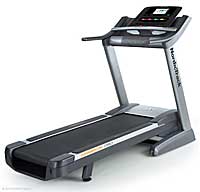
Quelques impressions après quelques mois d'utilisation du tapis de course "NordickTrack Commercial 1750 édition 2012.
Quand l'hiver frappe le Québec, ce qui arrive tous les ans, il est parfois difficile de se motiver à aller dehors surtout lorsque les conditions sont de type pluie/neige/glace ou alors carrément glissante. Avec un emploi du temps chargé, s'entraîner à la course peut donc devenir un véritable déplaisir/obligation ce qui n'est pas forcément souhaitable sur le long terme. Ainsi, ma charmante épouse et moi nous sommes mis en demeure d'acheter un tapis de course à pieds.
Résumé d'un entrainement
Internet à la rescousse et voici que nous sélectionnons et installons (ce qui ne fut pas une mince affaire : 150kg de machinerie à descendre sans trop la casser dans le garage). Réparation des pots cassés (les attaches d'un capot qui avaient sauté) puis se rendre compte que, à l'étape 2 (sur 50) nous avons oublié de brancher un fil (le fil de terre), perçage sauvage d'un autre trou et finalement branchement de a masse.
Me voici prêt à faire mes premiers km sur cette machine que je qualifie déjà, d'infernale ;-) [ajout : voici quelques photos d'écran pour illustrer cette revue]
Au niveau des caractéristiques : 3.5 HP en continu, grande surface de course (1m50 de long), ventilateur et hauts-parleurs intégrés mais, ce qui rend tout geek heureux et lui donne envie de courir sur place : une tablette Android de 7 pouces en lieu et place du traditionnel et triste panneau de contrôle !
Sans réseau sans fil, on a les programmes normaux d'un tapis de course soit 30 programmes répartis en vitesse, calorie, montée, manuel. Le tapis lui même a de très bonnes caractéristiques comme :
pente jusqu'à -3 degrés (légère descente) et +15 degrés (du step quoi!)
vitesse de 18 km/h maximum de 18km/h
Les programmes peuvent être utilisés via les touches de la console de contrôle ou via la tablettes. À l'usage, l'interface tactile de la tablette l'emporte : elle est très simple à utiliser, même en courant et avec une relative imprécision.
Carte du parcours dessinée auparavant sur google maps ou téléchargée sur iFit.com
Là ou les choses deviennent intéressante c'est une fois connecté à un réseau sans file et après avoir créé un compte "iFit.com". Une fois enregistré, il est possible de faire de la "réalité virtuelle" en courant sur votre tapis. L'usage de base est de faire, via google maps, votre parcours partout sur la planète et ... de le courir ensuite. En fonction de votre vitesse, la position est calculée et la pente ajustée en temps réel et vous pouvez suivre votre position sur la carte. Il est possible de faire des compétitions virtuelles avec d'autres personnes connectées sur iFit.
La vue "StreetView"
Personnellement, la fonction que je préfère est la suivante : il est possible de passer en mode "Street View" lorsque vous courrez. De cette manière, vous voyez vraiment l'endroit ou vous êtes. Je me suis ainsi amusé à faire :
le marathon de Boston
une course que nous faisons souvent à Sherbrooke (les trois ponts)
course à New York, San Francisco , le Cap, Paris
Bref, avec cette vue on est vraiment capable d'expérimenter et de voir le parcours de tout parcours ce qui est vraiment intéressant.
Pour bien illustrer le tout, une petite vidéo :
Je trouve donc que l'ajout de cette fonction est un sérieux plus qui permet de voyager en courant dans son garage. Du point de vue du compétiteur : je trouve cela vraiment utile de pouvoir me familiariser avec le marathon de Boston sans avoir à y aller auparavant : c'est un sérieux plus. La possibilité de pouvoir programmer ses parcours usuels (à Sherbrooke) permet de réaliser des entraînement à environnement contrôlé ou tout est reproductibles et mesurable.
Le tapis vient avec une cardiofréquencemètre, prise USB pour musique, un brower dans la tablette mais aussi un an de garantie (pièce) et deux ans sur la main d'oeuvre ce qui est appréciable. Je conseille donc ce tapis à toutes celles et ceux qui souhaitent une plate-forme évolutive (iFit évolue assez vite et souvent), rompre la monotonie des entrainement sur tapis en voyageant via google streetview, avoir accès à des entrainements reproductibles en tout temps.
En conclusion, nul doute que ces outils de ce type vont se généraliser et que, alors que l'on retrouve des tablettes android à 25$, la plupart des consoles de contrôle de nos appareils usuels vont se métamorphoser en composant de type tablette Android. D'ailleurs, il y a déjà des frigo Samsung android !
Ubiquité des réseaux, ubiquité de l'intelligence qui devient de moins en moins chère : que reste t'il à l'être humain ?
Use alternate USB boot (64 bit) to have an encrypted LVM
You will need to add "nomodeset" to the grub option (video/casper/whatever not functional otherwise!)
A different /etc/default/grub to have more battery saving kernel option. Be careful here, I read and integrated some hints from the LKML. Playing with the devil here ;-)
Note au lecteur : la maison d'édition m'a gentillement fourni un exemplaire du livre à condition que j'en écrive une revue. Pour cause de déménagement je n'ai reçu le livre que récemment et profité de mes vacances pour écrire ce billet.
Il me faut cependant attendre que le texte soit publié avant de le mettre en ligne, cela ne devrait pas tarder !!
History
The recent announce at UDS about the fact that the venerable X server & protocols will not be the default choice for Unity and as a consequence Ubuntu was a shock for some, it is clearly a relief for me.
In my precedent post about Unity, (before the UDS/Wayland announcement) I said "In this context, Ubuntu/Canonical is more conservative than Apple and Google that decided to dump X altogether. I'm not sure the X environment is fitted for next millennium challenges : once again, time will tell."
Obviously, the X server and protocol are great tools, very mature and with numerous capabilities. For a long time, evolution was slow, some would say "frozen" but then X.org did a great job and things started to evolve again.
However, being in the field, deploying X-based thin-clients since 2003 and designing larger scale and user friendly open source thin client solution (LTSP-Cluster) made me wonder if this was a protocol fitted for the future.
Why not X ? Without being a X expert, some of the issues that were critical in the (announced) move from X server to Wayland
Hardware support : I strongly recommend to run Linux only on hardware with a well supported video driver : without a well supported driver, the experience can be daunting, especially on a thin-client. X was supposed to be hardware independent, lightweight and provide great performance.
However these fights had been lost long ago : I've learned the hard way that not all X drivers are equals : open-source or not, how many XV channels are supported, 3D (what version exactly, etc.). In fact, selecting good quality desktop or thin-client hardware is a service we sold to our customers !
Size matters : a default X.org server, on my desktop where I wrote this blog is 64Mb (without cache), 180Mb (with cache) on a Ubuntu 10.10, 64 bit with regular 3D effects. Well, on a phone with 256Mb or RAM or on an ARM based thin client with 64Mb, this is not good. I can imagine it also has an impact on battery life on the mobile devices.
A toolbox instead of a simple tool : Without being "bloated", it is certain that X has evolved, along the year, to support a huge number of hardware, protocols and has a long history and has a load of quirks and "this is not a bug, it is a feature" type of functionality.
Crispiness : X is not very crisp. Without being a usability expert, I can guarantee that, in my experience on iPad, Mac, Android device, those devices are much more responsive graphically than your average Linux desktop. Why ? I'm no X expert but I will propose the hypothesis that this is because of the legacy of the project.
3D : Without discussing the time it took to obtain 3D support at the X level, remember the Compiz/Beryl/Looking Glass and the time it took for them to mature while most of the X user where despising the efforts ? How well is 3D integrated into your desktop environment ?
Why Wayland ?
Most of the reasons don't have anything to do with Wayland and are consequences of the present IT competitive environment, the current state of X as well as business needs. In this context, we will see that Wayland happened to be exactly what was needed : instead of starting from scratch a start-up project, hosted by freedesktop.org, an existing proof of concept and prototype, an already existing but small community with the goal to improve user experience.
My first reason is a practical one : I think that in order to make X evolves to a state suited for Mobile Internet Devices (MID) it request a deep technical knowledge of X as well as a long time to really convince all the X shareholders to agree to a change. Will the market wait for this change : I'm sure it will not ! Will everyone agree to the need to change : not certain either. Can a company accept this level of risk for what is their future ? According to Wikipedia, X11 dates back to 1984. Is it possible and wise to compete in this space with a technology that is 26 years old : I really don't think so (I'm saying this with a profound respect to everybody that contributed to the X11 project : the fact that it was great for 20+ years, in IT, is clearly a tribute to the design and the project itself).
Another way to look at this is the "disruptive innovation" or "disruptive technology" model. Mobile Internet Devices are changing the IT world ... big time. Major players are on the verge of becoming irrelevant in a new market that is growing faster than any other market in IT. Think about the position of RIM, Blackberry, PalmOS, Microsoft, etc. in this market space ? Others are sizing (creating?) the opportunity and went from losers/non-existent to key players (Apple with the iPod, iPhone, iPad and, of course, Google with Android). In order to compete in this space, legacy has to be left behind : your average MID does not share a lot in common with your desktop : UI of every single application has to be re-designed in order to take into account : screen size, touch screen, multi-touch, no mouse/keyboard, battery consumption, etc.
Wayland goals are the following (according to Wikipedia) "every frame is perfect, by which I mean that applications will be able to control the rendering enough that we'll never see tearing, lag, redrawing or flicker".
Well, in term of goal, it really puts the user in the center of things : a display manager that provide a great user experience. Ubuntu is popular on the desktop because it really put efforts into design and decided to place the user in the center of things.
Conclusion
Well, it is always interesting when a decision you were expecting happens. In a sense, I'm pleased and excited because it is the only way to compete and provide an open-source solution in the MID market and, why not, somehow piggybacking on the desktop market.
While Android could have been a possible choice, choosing Android will have constraint Ubuntu/Canonical to ... follow innovation, not to drive innovation. Also, Android has some issue, especially if you value the open-source development model where all the doors are open for the community to join and participate.
All in all, my only reserve is with the timing : if Wayland is ready in one year from now, it means a 2-4 years of delay compared to, let's say, Google and Android. More than this with Apple. In this context, the question is : Is it too late ?
Evolution and revolution are and will be needed in order for Open Source to continue to be relevant. This is particularly true in a disruptive market like the MID market. The announce was certainly a great way to launch one. History will tell if will succeed : I really hope it will and I really encourage the Open Source community to see the big picture out there, regroup and, ultimately, to contribute as much as possible to Wayland & Unity in order to make it a first class open source citizen able to run on any MID device and on any desktop.
A few month ago I already blogged about "the end of the (Linux) desktop as we know it." I will not blatantly repost this entry but draw some conclusions linked to the recent adoption of Unity for the default Ubuntu desktop.
My conclusion was the following : "At a certain level, one can say that the battle is already lost : the current desktop environments can not really fight this war as they don't own the key technology : the browser. As a consequence, the risk, for them (Gnome, KDE, etc.) is to be a tool that will launch a browser. A (relatively) simple tool that can be easily changed with almost no user impact..."
The recent announcement at UDS confirm that this road is the one chosen by Ubuntu. Now the question is why and what benefits for the key players here : Canonical, Ubuntu, Gnome and, of course, the users.
Mobile Internet Devices (MID) = application delivery
The new hardware platforms (most of them ARM based, touch-screen based, with small screen and no keyboards) rely extensively on the cloud/web based application and deploy specific small size applications on every connected MID.
The "desktop" on those platforms is very different from the one on your regular "old-school" computer : it consists mainly of giant dock with widgets and your most used apps and a task-bar that informs you about communications (tweet, email, voice mail, etc.) and the MID status (wifi, phone, battery, etc.).
Most of the regular desktop applications are barely usable on such a device : do you think that Open Office user experience will be great on a 640x480 screen with no keyboard ? All those applications are now somehow "legacy" and given the specific user interaction with the MID and the MID capabilities (touch screen, multi-touch, accelerometer, low computing power, etc.) can not be used, with a great user experience, on those devices. Even the most "cross-platform" software, the browser, is specific to the MID device and every major player rolled out a specific version (lighter, snappier, etc.) for those platform.
So can we use the legacy application, yes. Will they succeed "as is" on those MID : I don't think so.
Can a MID platform succeed on the desktop ?
Well, this is the interesting question. Ubuntu/Canonical decided to bet on it. In fact, instead of synchronizing your desktop to your MID, why not consider your desktop as ... a very large MID ?
Apple did it the other way around, Microsoft as well bu they both come from the old desktop world. Google did it from Android for MID to a hypothetical GoogleOS that will certainly be very similar to your Android experience.
Ubuntu/Canonical is betting on the fact that users will follow them from the MID market to the desktop market. This is an interesting challenge and a really disruptive choice : let's break compatibility with the past and embrace this new way of delivering applications.
Will it succeed : only time, users and the market can tell ;-)
Impact on key players : gnome, Ubuntu/Debian, Canonical, users
Well, as I announced it in my precedent post, the legacy of the desktop environment out there is too cumbersome to carry on this new trendy market. Nokia (QT, Symbian, Meego) , Google (Android), Apple and Canonical came to the same conclusion : they can not build on top of those legacy windows environment (most of the time : because they have to serve a community of developers and users that care only about the "old" desktop model) : they had to start from scratch for the user interface. However, they kept some very useful and precious components like the kernel, basic OS, etc..
In this context, Ubuntu/Canonical is more conservative than Apple and Google that decided to dump X altogether. I'm not sure the X environment is fitted for next millennium challenges : once again, time will tell.
Gnome : I think this is a great news. Leveraging the tools, library and previous applications, a new "shell" can be developed that will be perfectly suited for MID. This, I can imagine that innovation can flow more freely from Desktop to MID and vice versa. Will Gnome developers embrace this change ? Will it provoke a community meltdown ? This is more an ego risk than a technological or business one. FLOSS is famous for its ego war and this may be the greatest risk for this key-player.
Ubuntu/Debian : Well, this really open another market for this distribution. A strong differentiator compared to RedHat, Novell. Competition on this market is called Android. Not an easy one to take on...
Canonical : As far as I know, the OEM division will have another great product to sell ! Just look at sales figures from Apple and Android device. This look very interesting to me. As the third or fourth player (Apple, RIM, Google, ...), becoming leader in this market will be a real challenge. Two very closed platform, two very open platforms. A huge and very fast growing market.
Users : Choice is always beneficial to some degree. As the default desktop environment will change, we will see the adoption rate but I expect it to be quite large in the Ubuntu community. This is a well known tactics (anyone remember Microsoft embedding IE into the desktop ?) that has worked well in the past. Also, it will help "convergence", namely the unification of your desktop and MID environment ... through the cloud services that will be offered on this platform (Music, More content, Storage, Contact, Preferences, ...).
Conclusion
All in all, I think this is great news for the future of Linux and all the involved party (Gnome, Ubuntu/Debian, Canonical and Mr. User). My only concerns are linked to some possible ego-war into the Gnome community and the fact that this will "only" be a tertiary platform in term of applications and content delivery : RIM seems in trouble, Apple the clear gorilla and Android the strong challenger. Will the great marketing and community/viral effect of Ubuntu be able to modify the race results ?
I just flight with US Airways and I would like to relate some interesting story that happens to me and is, I think, shared by most of the airline industry.
I was late for various reasons :
somehow, my Nexus card was flagged as "deactivated" and I spend half an hour at the custom instead of my usual 2 minutes as it is the case when Nexus is working as expected (+30 minutes).
The airport parking was full (because of work done on the parking lot) and I had to use the the shuttle parking (+10 minutes)
Security was finding again and again some "large metallic item" in my bag and it was emptied and scanned 8 times (IIRC). It look like it was my keys that causes this (I used the same backpack and the same keys on more than 50 flights without any problem !] (+30 minutes).
During my security adventure, I could see the departure gate emptying and every passenger getting on board. I was not able to hear the announcements but when I was finally able to present myself at the gate, the lady told me "too late, you were supposed to be on board 10 minutes ago, your seat has been re-assigned". Been there, done that anyway so I remain calm and ask the only meaningful question I can think off :"are you sure the plane is at complete capacity ?".
The lady recounted the boarding passes (by hand, not using any computer which I found funny and slightly disturbing) and then visited the plane.
At the end, she came back in a hurry and told me I was lucky : some place were available ... in first class.
Another happy first class passenger ... but wait : is this ethical ?
Of course, I was happy with the experience and I'm writing this post from
a very comfortable seat with first class service reflecting on this particular
fact from a marketing and ethical point of view.
I'm not a bad customer as I fly quite often and from a business point of view
it make sense to give me some reward. However, the decision to upgrade me was not at all based on this information but on the sole fact that I was a bad
customer : I was late for the flight.
How come I have been rewarded for a bad behaviour ? Does it encourage me to
come up early ?
My advice to airlines companies
I'm sure that passengers that came early and are good customers are the one you want to reward. Not the one that are randomly late !
Please encourage ethical behaviour and reward
your on-time passengers
your good customers
In 2010, this should be an easy function to implement in your CRM : as long as
it will not delay the flight departure, moving a couple of passengers and then
assigning the remaining seats to the late passengers seems way more ethical and
that assigning the remaining (and sometime excellent) seats to the latest passenger...
The cloud : Basic definition The cloud is very trendy these days. It can be seen as a marketing tool to somehow revamp the Software as a service industry. This of course also evolves from simple "SaAS" to different levels of service, namely infrastructure as a service (think amazon EC2, etc.) , platforms as a service (think Google app engine, etc.) and of course the good old "Software as a service" (think SugarCRM, etc.).
Given the broad definition of the cloud, almost any IT company can say "this is what we've been doing since 200_" (insert your favourite digit here!)
When trying to sell these funny things, vendors encounter a major difficulty : many corporations/organizations are used to the so called "firewall principle" and don't trust anything outside their firewall for so-called critical applications and also for serious red-tapping (our internal policy prevents us from ..., we can not do this because of ..., etc.).
One can argue that security and IT management is way better for major cloud providers (Amazon, Google, etc.) than it is for most of us so-called "small scale" organizations ( compared to 1 Million+ servers , many organizations are "small scale" according to this definition!). Even if this is true from a technical and processing aspect , this does nothing to ease the pain and allow the cloud to be used by these organizations.
Ladies and Gentlemen : Here comes the private cloud ! In the past , vendors adapted their marketing and sales pitch by creating a new marketing term : the so called "private cloud" that refers to the re-branded "public cloud" offered by major hosting providers (Rackspace, etc.), web 2.0+ major actors (Amazon, Google).
In a way, a private cloud is the answer for vendors to somehow respect the "behind the firewall rules". It provides access to a cloud platform inside your organization. Also, it implicitly solves the "privacy/security" issue with a saying that says it all : private is private after all !
I believe this is highly misleading because it implies that everything on the public cloud is ... public. This is clearly not the case. Even if any given "public" cloud provider is so-called "multi-tenant" (meaning that different customers can share for a period of time the same hardware), if you use secure protocols and encryption, you can be pretty certain that everything you send is private and only seen by you . The only risk added being the one of the virtualization layer itself , are all virtual machines really isolated when sharing the same hardware ?
Most of the time, a choice has already been made : most of us have already been using virtualized servers in a production environment in the past .
For the "very secure" few that don't allow virtualization for security reasons , this is not the subject of this post ;-) therefore, you have two choices : Change your policy or stay away from virtualization and cloud technology...
My proposal is to drop the "public/private" cloud definition in favor of a more precise definition in order to define where the cloud is located in terms of network topology, whether the cloud is shared or dedicated and who managed the cloud (you or a cloud provider).
In front of your firewall or not ? More precise classification means, is the cloud behind your firewall or in front of your firewall ?
An internal cloud is behind your firewall
An external cloud is "in front" of your firewall, on the Internet
Managed by yourself or shared ?
If you manage your cloud, lets call this a self-managed cloud.
If you outsource the management of your cloud, lets call this an outsourced cloud.
Is it dedicated or shared ?
A dedicated cloud is used only by you. You are the sole user of the resources (servers, network equipment, storage, etc.) that provides the cloud services.
A shared cloud is multi-tenant : several users share resources (CPU, RAM, storage space, etc...). Often times , dedicated means more expensive : as the sole user of the infrastructure provided by the cloud, you have to assume all the costs.
However, given the "pay as you go" principle of the external shared clouds, it can be less expensive to run your own cloud for the regular load of your organization and to use the public cloud only for specific workloads/peaks. 3 major types of clouds : Internal dedicated cloud : self managed or outsourced ?
This is the closest to virtualization as we know it. Most of the time , you own the data, the servers and need to manage everything : the hardware, cloud software and the operating system. The main difference is that you use a cloud stack (open source or not...) consequently , you need to standardize your workload.
The main advantage of doing this is you benefit from an external cloud (managed or outsourced) and tap into external resources when you need it. This allows the IT department to offer a common platform to each internal customer. This is especially interesting for large organizations and can be much more economical than a public cloud.
Instead of a "pay as you go" way of billing, you can fit this type of cloud into a classic budget : capital investment for the initial deployment, fixed price for the management of the cloud. In practice, one can argue that this is not really "the cloud" as you still have to manage "scarcity" (i.e.: a fixed amount of resources) instead of ubiquity (a somehow "infinite" computing power, bandwidth and storage capacity). It is said that constraint generates innovation , therefore this type of constraint is not necessarily bad per say .
If you self-manage your cloud, you are in charge of all the stacks and regular IT processes : provisioning, capacity planning, etc. You can manage a fixed budget : a capital budget needed with a fixed operation budget (power, staff, etc.). You can manage scarcity (the actual amount of resources you have).
If you outsource the management, you are a user of your cloud and can decide to scale up based on pre-agreed fees, per server or per-storage nodes.
This model fits nicely into an existing infrastructure and acquisition process : you can really benefit from this model as you are able to leverage the somehow "standardization" of the workload management while you remain completely in sync with your organization's acquisition policy and budget.
External dedicated : self-managed or outsourced
External dedicated is an extension of the preceding category: you can use a hosting provider to own your own cloud. In this case, the cloud is clearly in front of your firewall. On the other hand , the cloud is not shared. Servers are only used by you and no one else. You can even re-sell your spare cycles ;-)
You can also self-manage or even outsource the management of the cloud.
This model requests only minor updates to your security policy. This is very similar to hosting your public services at a data centre , can become an easy sell and an easy way to start implementing a cloud strategy.
External shared and outsourced
This is the "classical cloud", the one offered by Google, Amazon, Rackspace, etc. This infrastructure management is outsourced to the cloud provider and the cloud is therefore multi-tenant : various users share various physical resources.
Conclusion
We defined different ways a cloud can be deployed into an organization and used some more precise terms to define where the cloud is located (topology), who managed it (you or somebody else) and if the cloud's resources are shared or dedicated.
These definitions clearly overlap the traditional marketing and trendy "public/private" cloud approach and this is why the public/private vocable seems inappropriate due to its lack of precision.
In terms of IT governance and acquisition processes, the internal dedicated self-managed cloud is the easiest to sell/deploy, even for a very conservative organization. Benefits from the cloud could be very important even in this context, especially if you have developers and the need for development, staging and production environment.
Of course, to be able to really tap into the ubiquity of the cloud and its potentially unlimited (but billed!) resources, one will need to extend its comfort zone and somehow connect to a shared external and outsourced cloud. This disruptive innovation is only available for organizations that have completely revamped their development process, their security policy, as well as their acquisition mechanism.
Start-ups don't have any legacy and can start right away without any capital expenditures , this said , Cloud and its operational costs is directly based on usage : this is not something every organization is ready to deal with.
Other organizations will need to compromise and can do so by using any of the mentioned cloud deployment models that provide various levels of flexibility in terms of :
capital vs operational budget (private -> shared)
outsourcing or not (self-managed -> outsourced)
firewall position (internal->external)
Of course, another important parameter is about free/open source/neo-proprietary/proprietary cloud. This is for another entry ;-)
The Freemium model is a marketing model used by lots of service based companies. The principle is to offer a product "for free" supporting it with or without advertising and offer value-added services to "premium" customer that pay a fee. Very popular amongst startups and recent technology companies : skype, linkedin, rememberthemilk, etc.
At some point, one could even argue that the most successful open source company (RedHat) is very closed to this model : they offer a great product for free (the RedHat Linux Distribution) and monetize services of only a small percent of their users.
Fauxpensource has several definitions and even if this is not yet a widely used term. Some synonims are open-core or neo-proprietary. Neo-proprietary is the term I will use in this post as there is no common sounds or part with Open Source.
Somehow, what happens when you marry the two concepts together ? Well, that's somehow the subject of this post.
Open Source various dimensions for neo-proprietary +freemium companies
Open-Source has several dimensions not only a economical/marketing : a healthy project has all those aspects covered/fulfilled : technical, political, philosophical, economical, social, ethical. My point is that, more and more, companies are using open source only for its economical value : as a cheap and fast way to build a community of users (free) and, more importantly, customers (paying) that allow them to replicate the business model of traditional software editor.
In some respect, the market is expecting this exact behavior : entrepreneur are now advised by the investors/VC/lawyers to make sure that everything is covered from contributor agreement to free and paid users agreement.
The (not so) hidden plan is simply to have an exit strategy based on an acquisition so that any number of closed source/traditional company can integrate/use the intellectual property (lawyer language here!).
Today, being open-source is seen as the fastest track to build a freemium (aka potential customer) and premium (aka real customer) "community" (much more sexy than customer base).
I will argue here that this is not really open source and it hurts the open source brand as a whole : those startups (and there is a lot out there!) do no take the time to develop their :
ethics. For contributor : yeah yeah, open source is very important for us : please sign this contributor agreement that allow us to re-license all your contributions as we see fit forever, etc.
political. Most of the time, there is no political structure, only a business structure that dictate the politic based on short term goals or based on the exit strategy (the exit strategy is not communicated to the employee or customers but all the structure is designed to maximize the value of the product)
technical. Well, most of the time open-source is selected for technical excellence. In those companies, an open source technology is selected based on license flexibility/compatibility, not based on technical excellence.
social. For products, the goal is to have paying users, not to build a community of like minded people. Same thing for employee, developers/contributors. The social aspect is simply a mean to maximize the profit when the company will be sold : it is a honeypot to attract paying customers.
philosophical : well, long term goals do not match very well with VC with an agressive exit strategy.
Of course, the economical (and legal!) aspects are very well developed : this is the main (only?) concern of the shareholders (entrepreneur, management, VC, etc.) : it is the only measured indicator (burn rate, market value, conversion rate from free to premium customer, etc.).
Why is this harmful for Open Source?
Well, let's follow a customer experience in this context. He knows a bit about open-source and find the model interesting. He like the idea to have a company that can provide value with a service offering or an add-on offering.
He tried the open-source/freemium edition and later on he decid to purchase the whole package. Then the company is acquired by Orache Corp. and everything is turned upside-down : the "product" can become proprietary again, price can be doubled (or worse) or the service agreement terms completely changed.
For this customer and for the market, there is no difference between this and any proprietary software : the community is, most of the time destroyed by the acquisition, the business ecosystem as well, the long-term strategy of the project can be completely changed and nobody has a saying about this : everything has been carefully planned by the buyer.
The customer has been deceived : he trusted a brand (Open Source) but has been manipulated into something else (in this example : becoming customer of a proprietary software). There is no difference between this story and the numerous stories involving dissatisfied customers that are hostages of the numerous mergers and acquisitions that occurs in the IT industry since its inception.
In fact, the mistake made by those companies is to restrain open-source to a technical, economical and legal questions only and not to consider the complete scope of Open Source namely the ethical, political, social and question.
I learned today a the open-source think tank in Paris that 90% of companies get acquired : this is the most frequent exit strategy for most of the companies and there is nothing wrong with this. Being "Open Source" should be more than an exit strategy for a start-up and that labeling those companies/projects "Open Source" is misleading for all the open source community.
How can we, as the Open Source community make sure that our brand still carries feelgood and positive values ?
I think that labelling properly the "neo-proprietary" companies would be very helpful : even if they respect the open source license, they clearly don't intend to respect the spirit of open source. In order to do so, proper criteria accepted by the community have to be defined and the term has to be used extensively by the community.
This is a personal overview of a great sporting event. I'm proud of this particular accomplishment. They confirm that effort generate success. I think this is very easy to generalize in any aspect of our life : business, personal, family, etc. Our TV culture, however, put a lot of emphasis on the results. Results only occurs because of efforts but effort is less attractive for prime time. Anyway, skip this paragraph if you are only interested in the race, read more if you want to know more about effort ;-)
I came to Triathlon because/thanks to a friend and co-worker (Nando). After having played Rugby for years (flanker, number 7), I had some repetitive shoulder (left) injuries and have to visit the surgeon. Operation went fine but ... no more rugby. I ran a little and like to bike and my physiotherapist told me to swim in order to help/fasten my rehab. Then Fernando hook me and told me : well, Ben, you run a little, bike a little and swim a little. You should try a triathlon ! (Fernando has already complete several Ironmen at this time). Well, I think that I weighted 44 pound/22 kg more than now at this time : starting a company and a family tend to give this kind of results if we don't take care of ourselves...
First triahtlon in 2005, lots of great reading (Triathlon training bible, going long and others) and self-coaching for a few years. Each year, I changed the distance from sprint to olympic (year 2006), then from Olympic to half-iron (year 2007), then from half-iron to iron distance (year 2008). In the last two years, I joined the racing club, the cyclist club and the master-swim club in Sherbrooke in order to perfect and train with partners.
My first Ironman distance race was the Esprit Triathlon in Montreal in 2008 (11:38). I raced again in 2009 but with less preparation and more "last-minute" decision to do it and it was harder (weather was very hot : 28 Celsius) and more difficult (12:12). My training buddy Jocelyn decided to do Lake Placid and I joined him to volunteer on the race in 2009 (we were at run aid station number one, just before arriving in town).
Being a volunteer was really an eye opener : helping others to accomplish themselves and perform is really a cool thing to do. Anyway, I pursued my training with the different club and used a training plan from Endurance Nation (http://endurancenation.us). I'm a very active person (CEO of a young company of 30+ people, father of three, traveling quite often) and I was very limited in the amount of hours I can dedicate to Triathon. My personal philosophy is also to do (at least ;-) one hour of training per day. On average this is gave a 7 hours/week during autumn/winter and more during summer (12 hours/week max). This is very similar to what Endurance Nation is proposing : Ironman training for people with a busy life ;-)
During winter I did a lot of running, powermeter work inside, swimming (three times a week) and then strength (core and plyometrics). When the good days arrives (I live in Quebec : lots of snow !) then much more run and much more bike and minimal swim. No marathon this year : I ran several half-marathon and train focusing on speedwork, intensity and bricks.
Stress ? A few days before the race
I'm a very active person and being in holidays is always funny : I tend to gave me challenges and "jobs" that I don't have time to do during my regular year. This year I was in search for a family fun Recreative Vehicule (RV). I found my golden RV a few hours before leaving: I organize the selling from Lake Placid and went back to Quebec for insurance and technical expertise. I guess this was my way to not be over-stressed by "doing nothing" ;-)
It worked well, as far as I know (have to check with my kids and wife ;-), and I was stressless for most of the week prior to the race. We had some good family time : camping under the same tent and being together for 24 hours a day is always an interesting experience. Kids love camping and they found all type of activities. We were less than one mile from Lake Placid main street and we use the free shuttle some time.
My "taper" was really a simple one : I swam the half distance (1.9 km) daily until Friday. Two time at race time (7 AM) using my race day stuff. I biked once with Jason (he was on the same campground) and we did maybe 40 km along the run race. Did some interval runs (high intensity for 30''/2') Tuesday and Thursday.
I was not particularly nervous even when Marc, another buddy of mine doing the race called me Thursday PM : "Ben, you don't have a bib number, something is wrong with your registration". And so it was : no bib number, not on the "official" athlete list but on the "confirmed" list nonetheless. Well, nothing I can do until Friday anyway. So I asked Marc to contact the organizer (no Internet) and he did so with the following advice : "Go to the solution table".
Friday was as bit more stressful because of this situation : anywa, Jocelyn and I are going to recover the athlete kit. I went straight to the solution table and explain my problem. Some long seconds that felt like minutes/hours : "Sorry I can not find you on the athlete list!". I say : well, I have the "active.com" email confirmation so maybe you can double check and see you "other lists".
So she did. After a few seconds (minutes/hours ;-) : "Oh ! I found you, you withdraw from the race last week".
Me : "Well, I'm no aware of this. Can you double check and show me some proof ?". So she did and show me an email from someone with a very similar first name and last name from Quebec (I'm "Benoit des Ligneris" and he was "Benoit desjxxxx"). I stayed very calm and told the lady "Well, that's not my name".
She double check and seems as relieved as I was : "Don't worry, we have extra kits and bibs for this kind of problem". So I took a seat from the nearby table and start to fill the paperwork (disclaimer, etc.). Then she asked me "Well, I have to charge you again because we refunded you". Me : "Well, I checked my Visa transation record up to last week, and I can assure you that nothing positive comes from my VISA account ;-". And indeed, I have been cancelled but the right guy has been refunded...
Anyway, after filling the paperworks, I was the proud owner of bib 3018, championchip and co. All in all, it was very quick : I finished my registration a few minuted before Jocelyn. I was, at this time, a very happy camper ;-).
Saturday : No action day for me. We prepared our bags (Jocelyn, Marcus and I). Prepared our bikes (did a small 100m road test) and bring everything to the transition area. I went to bed at 8PM, no nap, no coffee.
Race day !
My nutrition preparation if the same for years now : mainly cut and paste from the Joel Friel "Triathlon training bible". I ate 1500-2000 calories 4.5 hours before the race (depending on stomach feeling and temperature). In this particular case, it means waking up at 2.5 AM in the tent, trying not to wake up anyone.
Two fresh bread small buns (from the lake Placid bakery : great bakery !) with honey (lots of honey ;-) : 400 Calories
Ensure : 250 * 3 = 750 Calories
Total : 1570 Calories (approx)
As I prepared everything before going to sleep I was relatively silent, I only waked up my poor wife, not the kid.
Wake up planned at 5:30 AM but my eyes were open at 5:05 AM. So I wake up and start to pack my stuff. All the family was waked up at this time : long day for everybody I guess !
We leaved, by foot, for the oval at 5:50AM, arrived at the Oval at 6:10. A little late to my taste but still OK I guess. We met briefly with Pierre, friend and training buddy of Marc in Montréal then we lost Marc somehow. I add a towels in my T1 bag and we went with Jocelyn to gave our special need bag/run. However, The location for the run special need bag was quite far away from the swim start. Going bare foot is not ideal neither given the large number of people (athlete and spectators alike). Anyway, I asked a spectator that was already carrying a special-need bag and he gladly accepted to deliver our bags : thank you very much.
We then wen near the beach in order to put our wetsuit. A few minutes later (6:40) we went in line in order to cross the portal and be officially counted in the future massive swim start. Just in time for the pro start at 6:50. Not very impressive : we did not see much. Some waiting time where I think about my race strategy (more on this later). We wait until the 6:55 before going into the water : put some water in the wetsuit and test the goggles.
Swim leg : start & first lap
We then went in the exterior side of the starting line : it is about 100m large but 2700 people where on the "starting block" so even if this is large, it creates a very high density of people in the water. I did some open water swims but the largest one has 900 people and it was a beach start so I guess this was the first time I saw such a human density of population in any water. Anyway, we took position on the exterior side of "the line" (this is a yellow cable that run underwater and hold the buoy in line) as advised during the athlete meeting.
Anyway, it looks bad and somehow, it is bad :
I wanted to start fast, say the first 300meters and then find some sweet spot and find my own rhythm, ideally drafting some fellow swimmers, mainly to avoid sighting. Also, as advised, I wanted to swim "wide", far away from the line between the buoy. My face get kicked several times, mainly from swimmers from the side and I had to re-install my goggles 4 time. I guess it appear as a long time but it was no more than half the first leg of the swim, so no more than 450 meters. I was pushed on the inside and had to work somehow hard to go wider.
My swim alternate between what I will define pocket of calm and peace : some space between swimmers, a kind of peaceful hole, and then, a few minutes later it transform into a fight zone where several swimmers joined but with slightly different speed and direction.
Anyway, after the first turn, I was able to draft properly someone : my technique is simple, I stay on the right or left side of the swimmer and I avoid contact most of the time. I also "protect" my fellow swimmer from fellows swimmers by making sure nobody gets between us. I switched a couple of time as I was able to
swim a little faster than my unaware swim buddy. First lap in 34 minutes. Great time for me !
Swim : second lap
The second lap was very similar to the first one except that it was less crowded and, as a consequence, I was able to keep my goggles ;-) Almost no contact this time : one or two and I guess it was fast swimmers going thru the pack. Anyway, I went wide and was able to draft well (as a consequence, sight 2 or 3 time for the 900 meters) until the buoy. Intensity was not so high for me but I knew it was going to be a long day so I was OK with it. At the buoy, marking the fact that I already did 3/4 of the swim leg, I decided to speed up a bit. I was then able to reach "the line" and it was convenient to do so. Instead of drafting, I increase my speed and went almost "all in" for the last 400 meters. Great feeling.
As my buddy Jocelyn said in Ironman : you are very happy when the swim leg end, then going off the bike is a true benediction and then of course, crossing the line and doing nothing feels great !
1:10:45 was what I read on the screen when exiting the water, 1:10:50 is my official time. I was happy with the result : 5 minutes faster than planned. If the day can continue this way ... so be it ;-)
Transition 1 (T1)
I used a "peeler" : a volunteer (thank you !) that remove the wetsuit for you. Immediately after going out of the water I removed my wetsuit arms and then, I sit down and a volunteer ("peeler") removed my wetsuit : fast and efficient !
The Oval is quite far from the swim end and you have to run to get your bike. There is a huge crowd during the transition and it is very difficult to go slowly ;-) All the spectators are cheering at you and everybody is running fast. I reached he oval, a little overwhelmed and not very focused. Some confusion in the bag handling, maybe because of my non-standard bib number ? Anyway, I finally grabbed my bike, walk to the tent and change myself.
It was my first Ironman race and I was not used to put everything in the bag thing. In all the other races I did, transition stuff is around the bike. I changed myself completely (not quick but comfortable) : bike bib, bike jersey, etc. Putting the compression socks was challenging : next year I will use another system (compression sleeves under the wetsuit).
Then I reached for my bike. My number was called but once again, I guess 3018 was not where the volunteer expected. I grabbed it myself and that was the end of T1.
Anyway, 10 minutes transition can certainly be improved. I forgot to put some sunscreen on !
Bike course : lap 1
Happy to ride, I was careful not to overdo it for the first lap in order to keep energy for the second lap. I get somehow to higher intensity than I planned hitting the 150-150 BPM on my cardio more often than not during climbs and even during the flat sections.
I pass by the family : they were located 1.5 km after the town, before the horse ground. I was very happy to see them and very motivated to see them again ;-)
During the flat section, I ended up almost always with the same group of people : while not drafting. In fact, the lead was quite disputed and everybody had different strength : flat section, up section, down section, climb and down section. It was sometime difficult to respect the rules as so many people where on the road this day. Anyway, going from 896 out of the water to 299 on the bike mean that I went by a lot of people, especially during the first loop.
I broke with most of my "same speed" group during the climb from Jay to Willmington. I practised this a lot in training and I was very careful to keep a high cadence.
I had all my solid nutrition with me and two bottles at the start and 5 gels. During the first lap, I ate solid (Clif Bar are Yummy !) and bananas (given at every aid station). I was quite satisfied with my catching performance : I obtained most of what I wanted during the aid stations and I think I will go lighter next year.
My goal was to fuel the Ironman in someway and still have energy for the Marathon.
We had some showers by moment and the weather was sometimes cool (shade+water) and generally overcast with some patches of sun here and there. A great day for doing an Ironman ;-)
I never practiced the end of papa bear and it is climbing a little before coming to the transition zone but coming on top of Papa bear was very pleasant and felt like the tour de France : lots of people playing music and cheering at all the athletes. Difficult not to rush when everybody is clapping and cheering at you so I guess I went fast until the second lap.
I was impressed by my speed during the first lap (33.54 km/h or 21 miles/hour on average) and decided to not push it for the second lap.When I did my recon (160km of the bike leg), I did 30.1 km/h on average (it is true that I wanted to take it slow and easy in order to practice the course in order to run the Lake Placid half-marathon the day after ;-) and this was my goal for race day.
Bike course : lap 2
Uphill from Lake Placid was OK, I met the family again and was somehow rejuvenated. I did not overpush it until the big downhill.
Well, I went a little slower both from a heart rate and perceived effort point of view. I hate solid for maybe one hour and then stopped (beside bananas) as I know that it is all my stomach can take.
So I started eating my gels and the one from the organization. And an accident happens ! I'm used to Carb Boom gels and they are somehow more "solid" than the powergels that were handed out. So the first time I grabbed one and try to eat it, half of the gels ends up flying in the air and fall on my watch (in the middle of my aerobars) and bike. I was a little puzzled and took notice for the next time. I took most of what was on my watch and ate eat and I believed it was the end of it...
In the flat section, I felt somehow that something was wrong : I had difficulty adjusting my position on the saddle and some delicate part of my anatomy started to feel heated somehow. Anyway, only 60 km to go and I guess I was busy putting some watts in order to stay with my new speed group ;-)
Ausable fork and a half-turn then back to jay and the climb to Willmington. Once again, I pass most of my folks here. The last 20 km were ... more painful that I remembered ;-) Maybe because I went harder but the series of uphills and downhills with the steady climbing get the better of me.
Also, my delicate parts started to really hurt now and in order to move on my saddle I somehow had to "unstick" my bib and move. Once again, first time for me as I never had any problem with this in the past. I guess I was to focused to really analyze things : I really wanted to maintain a high cadence and make sure my nutrition was OK.
Then came the bears : Mama, Teddy and Papa. Everybody was tired and me too. Spinning was painful now and hurt more than usual and I was not tempted to push harder as I knew that a Marathon was waiting for me. So I spin easy and went by this part. Once Papa bear is passed and all the cheering, I really went easy (>90 RPM) to prepare my legs for the run. Powergel, water and that's transition...
Average speed is 20.1 miles/h or 32.2 km/h for the second lap.
On average, speed was 20.14 miles/h or 32.2 km/h so I guess something is wrong with the data : http://ironman.com/events/ironman/lakeplacid/?show=tracker&rid=301&year=2010#axzz0vGlxfHoI
Bike time : 112 mi. (5:33:43) 20.14 mph 299 overall and 64 in my age groupe (30-35). Feeling good ;-)
Nutrition (approximative) :
4 Clif Bar = 1000 Cal
8 half-banana = 8 x 50 = 400 Cal
5 gels = 5 * 90 = 450 Cal
5 bottles sport drink = 5 * 150 = 750 Cal
Total = 2600 Cal. For 5.5 hours = 472 Cal / hours. Not too bad and no stomach problem.
I was more focused on the transition than after the swim leg : I took the time to mentally repeat the different steps needed. I removed my Garmin Forerunner from the bike and put it in my bike jersey. At this time, my crotch really hurt on the right side from unwanted heat and friction and I have no clue why it happens. Stay tuned for more ...
Transition Bike to Run : T2
Several volunteers asked us to slow down and I did. Then an official show the dismount line. Go further than the line and you are disqualified (DQ) not an What a joy to get out of the bike ! Really, this feels so cool ;-) Of course, everybody is cheering at you and it really helps but the first few steps are really enjoyable.
The bike park feels empty (I guess there was "only" 300 bikes compared to 1900 this morning !) and this is a good feeling ;-)
A volunteer grab my bike and I can run to grab my run bag. I visited the toilet (no queue) and was really relieved after this : I decided to handle it until transition on the bike and it was almost an emergency ;-)
Then to the tent to change myself. Tent feels empty and everything is much more organized than during T1. I find a spot and a volunteer took care of everything for me : my dirty stuff in the old bag, prepare my shoes, cap, etc. And this time, I did not forget sunscreen : I will be white during all the run because of the cream but ... no sunburn ;-)
Run course : lap 1
My secret goal was to run a 3:30 marathon. I ran my other ironmandistance marathon in 4:38 for once and 4:58 for the most recent one. I really improved myself on the run leg but I never really was "comfortable" or even "in control" of my Marathin during an Ironman. My personal best is 3:20 on a marathon alone so I guess the 3:30 was an ambitious goal ;-) It means 5:00/km or 8:00/mile. The first six mile were OK I guess
The start of the run is a downhill section down to main street and I felt OK : I went really slow for the first mile and gradually improved my speed. Stomach felt OK. It was hot then but not that much I guess. As I have lost my watches (more on this later) I don't have my entire race splits. So I will only use the available statistics but they fully correspond to my feelings and souvenir ;-)
First 10km were OK and I have a good rythm : 50:20 for the first 10k, this is a little more than 5min/km but I'm on target. Then when going back to town, I tried a "stupid" move : namely to grab my electrolytes that were located in my short back pocket. I cramped badly because I had to turn my body to reach for it and my shoulders and arms were let's say, somehow rigid and hard to move. So I had to stretch myself and proceed carefully ... and slowly. I jogged most of the time I guess until I go by the family (my youngest one is not there anymore, sleeping I guess and my second one is sleeping on the chair but Caroline and my wife cheers at me). I grabbed a lot of energy from this while the other part was saying to me : me too, I want to have nap ;-)
The uphill section to main street is as hard and painful as I remember. Passing by the oval when coming back in town is difficult and the lakedrive section is ... long : the turnover seems like infinite to me and going back to town very similar. It is difficult to see some people that are now over and ... you are only "enjoying" your first lap. Anyway, I'm not pushing things and I don't feel great in my mind. I guess the next loop is going to be difficult. Mental started to drift somehow and this was the end of loop 1.
Run course : lap2
Going down Main Street is not so pleasant : people cheers at us and all but I was really trying to go slowly and to relax in order to avoid shock on my feet so I tried to be tall, have a good leg turnover and relax the arms somehow.
Once again, I'm lucky to go by the kids and they cheers at me and show me their wonderful signs ;-) Give me some heart and it is the start of my improvement in mental attitude : up to this point I jogged but now I really want to race and have a good feeling so I really start to increase the leg turnover when going uphill. No cramp and not any more try to grab my electrolyte : not worth the price ;-)
Pitstop needed and I went to the toilet once again. I guess it lowered by average speed but it was worth the price ;-) I ate some pretzel instead of my electrolytes and here we are : end of river drive and back to town.
At this point, I know that I will make it, whatever happens : nutrition is OK, only 10 km to go and I decided to go "all in". I know that my family will wait for me in the Oval and will not be there when I will get back to town : this is the plan.
I was really pleased to meet Gervais, a running buddy : he ran a little with me and asked me some news about his son (Micael) and Jocelyn. I told him I've seen Jocelyn and he will come in maybe 20-30 minutes as I've seen him on river-drive. I did not see Micael so I was not able to give him some news about him. We chatted for maybe 1km and then he left me in order to support friends and family. This really start me up for a strong finish but I remembered that the turn-around on lake drive was very far so I keep some energy for the last leg.
Benoit des Ligneris (well, last name was more like "Lyyygnureeeess"), you are now an Ironman
The run to the turnover on lake drive does not seems so long this time and it was now time to go back to the Oval : the exit is waiting for me as is the finish line of the Ironman. Feelings are all mixed up at this point and the crowd is really wonderful ! I'm happy and sad and well, running fast : I still have some energy it appears ! It somehow confirm the mental characteristic of endurance I guess.
Someone is flying by me but I don't feel like chasing him : I decided to savour the moment. Carpe diem in some way. It looks like a dream comes true and I'm overwhelmed by joy and pride I guess. This is a post-race analysis and arriving on the oval simply felt good at this time. The ambiance is wonderful I just run past the line and .... I hear the famous "Benoit (I understood this one!) des (OK) something, you are now an Ironman"
Final time is 10h53:42 and my marathon time is 3:52. A bit short of the 3:30 goal but not that much. I wanted to to 11hours so I guess this is great and I'm very pleased by the result and the experience ! A volunteer take back the champion chip and give me a medal and a T-Shirt and a cap.
I felt somehow dizzy and a volunteer grab me to the medical tent. So be it I thinked, a small rest and that's it.
Medical Tent
My weight was OK (only 2 pound less than my usual weight) and they gave me soup and sport drink to bring this to balance. Once on the bed, I felt better but my hands and feet were very cold. I put my new shirt (dry) and new cap on me (dry as well) and remove my shoes. After a while, my hands and feet felt numb somehow and were very cold. So I get a wonderful massage with camphor gel and it brings back heat in my shoulders, arms and hands. Same thing for my legs and feet. The masso-therapist mentioned to me that it could be linked to some thyroid problem or simply to the fact that I was exhausted ;-) My father has the same type of symptoms and it already happens to me, especially when swimming in cold water so this is something I will check.
Anyway, I forgot in the medical tent my cap (2XU, white), my running top (TYR, white+blue, ironman, no zip, two pockets), my two watches (Suunto T6 and Garmin Forerunner 305). Not found yet so if you happen to have found them, please contact me !
After that I went out of the tent and just found my buddy Jocelyn ! We congratulates each others and I then looked for the family. I found them by luck : we decided to grab our bike and stuff and go the the camping when I saw them near the Oval. Everybody was re-united and very pleased to do so. Hugging my family was a real pleasure as I perfectly knew that they supported me countless hours when I went training for this madness...
When I grabbed my bike, my seat was very sticky ... on the right side. And a I finally understood a brutal truth : part of the gel felt on my seat and the stickiness cause the bib-short to stick there. Of course, the friction was almost integrally transferred to my crotch and well, it was painfull for several days after that. I waited 5 days to try my bike and it was not a pleasant experience.
Lessons learned : for next year and for any athlete !
Start wider on the swim.
Two swim caps : first cap, then goggles, then second (official) cap. It should help keep the goggles in place
Put the bike cloth under the wetsuit
No compression socks : simply compression sleeves under the wetsuit
Go harder on the swim : I was mainly following this year, I think I would like to follow my own rhythm next year
If your seat fells sticky ... it is sticky : use water to wash the seat !! It can cost your dearly otherwise.
Only one bottle is OK to start the bike if you make sure to grab one or two at the first aidstation
Keep your stuff with you, especially watches ;-)
Bring some heat oitment next time I'm cold !
Define precisely where the family will be at the finish line to help be together sooner